On the Road to Zero Emissions
Commitment to Sustainability
CATA is committed to building a cleaner, more sustainable future for public transportation. Through investments in electric and hybrid buses, expanded mobility options like CATA Rydz and ongoing operational improvements, CATA is working toward a goal of achieving net zero carbon emissions by 2030.
As part of this long-term commitment, efforts across the system continue to focus on reducing environmental impact while providing reliable transit service and supporting healthier communities throughout the greater Lansing region.
Cleaner Air for All We Share
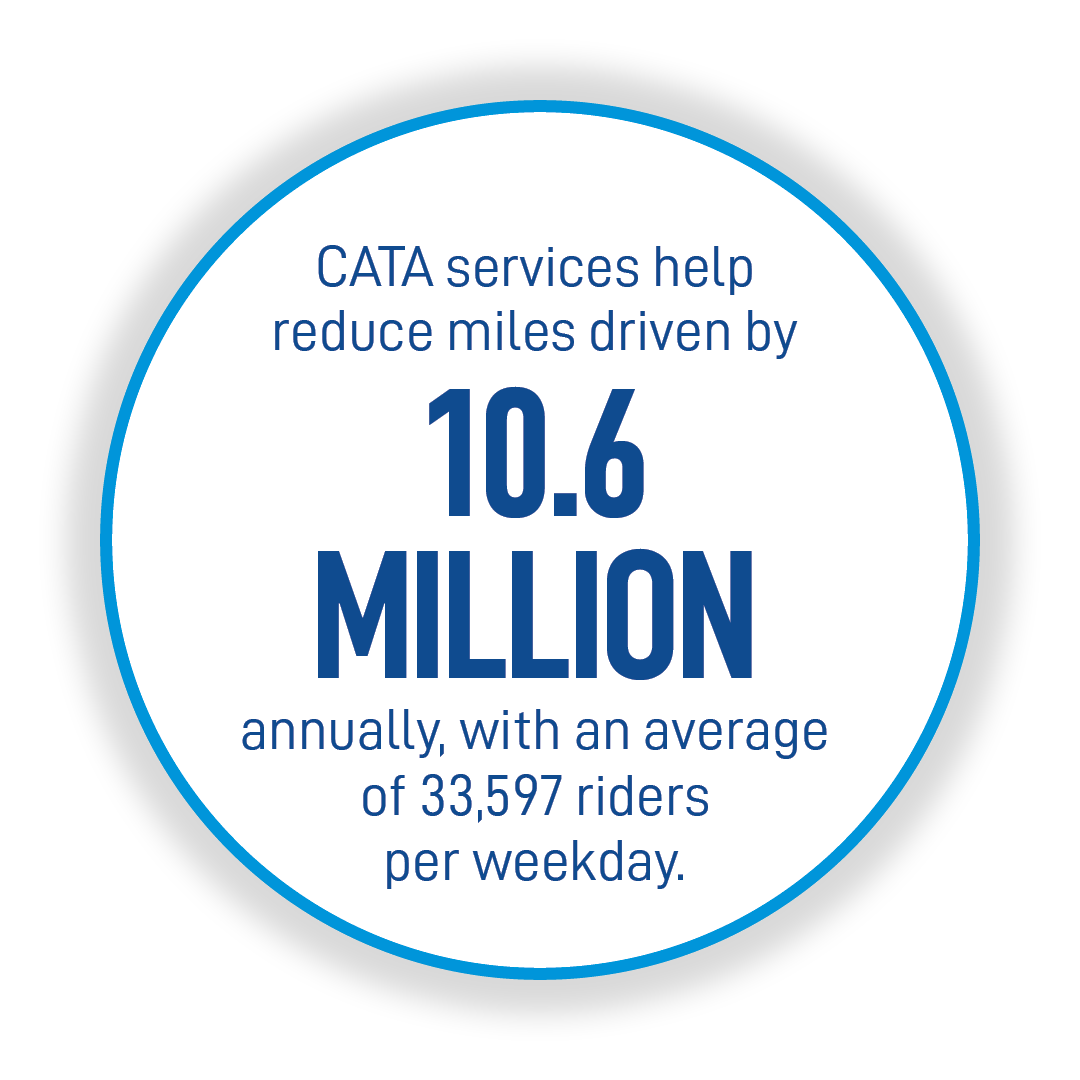
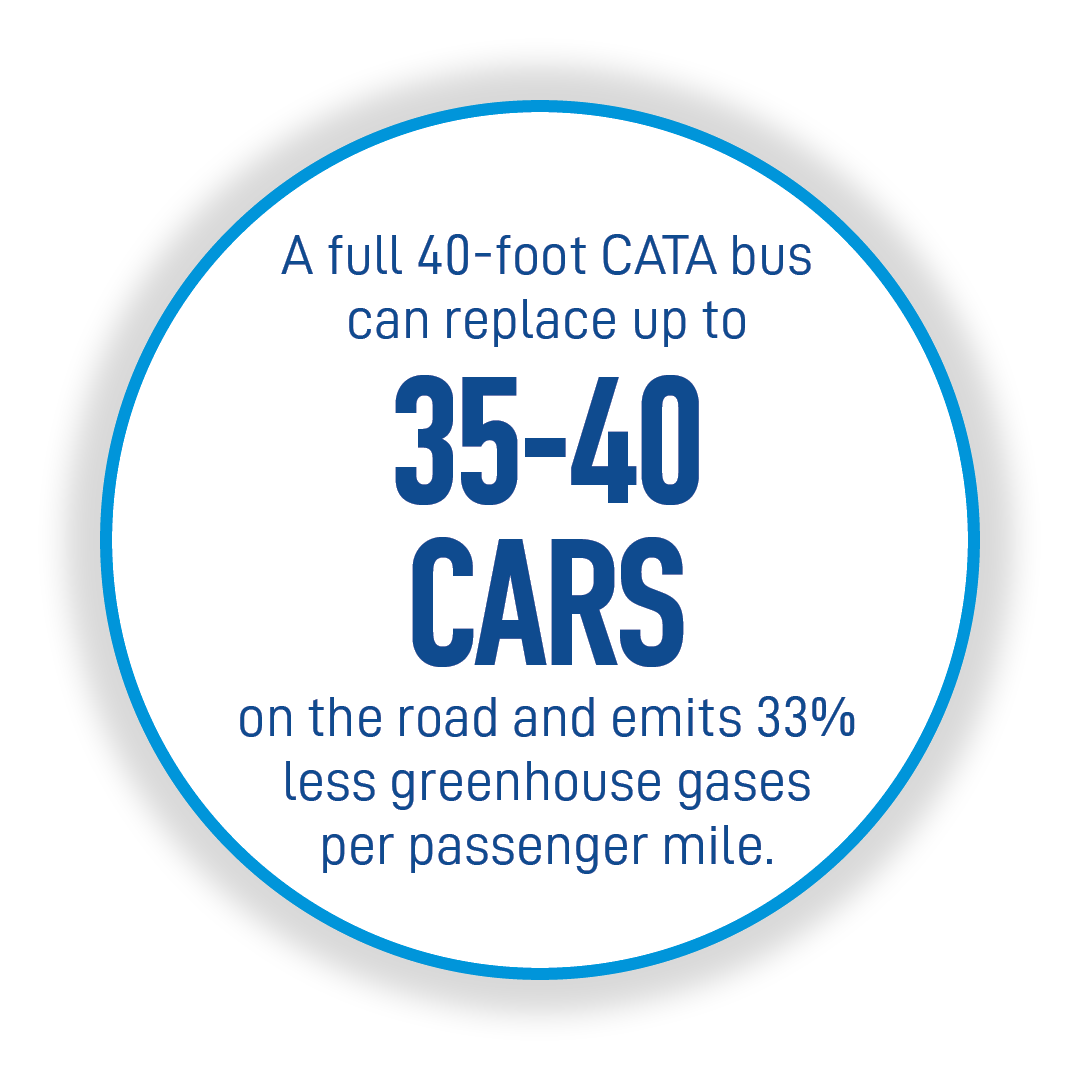
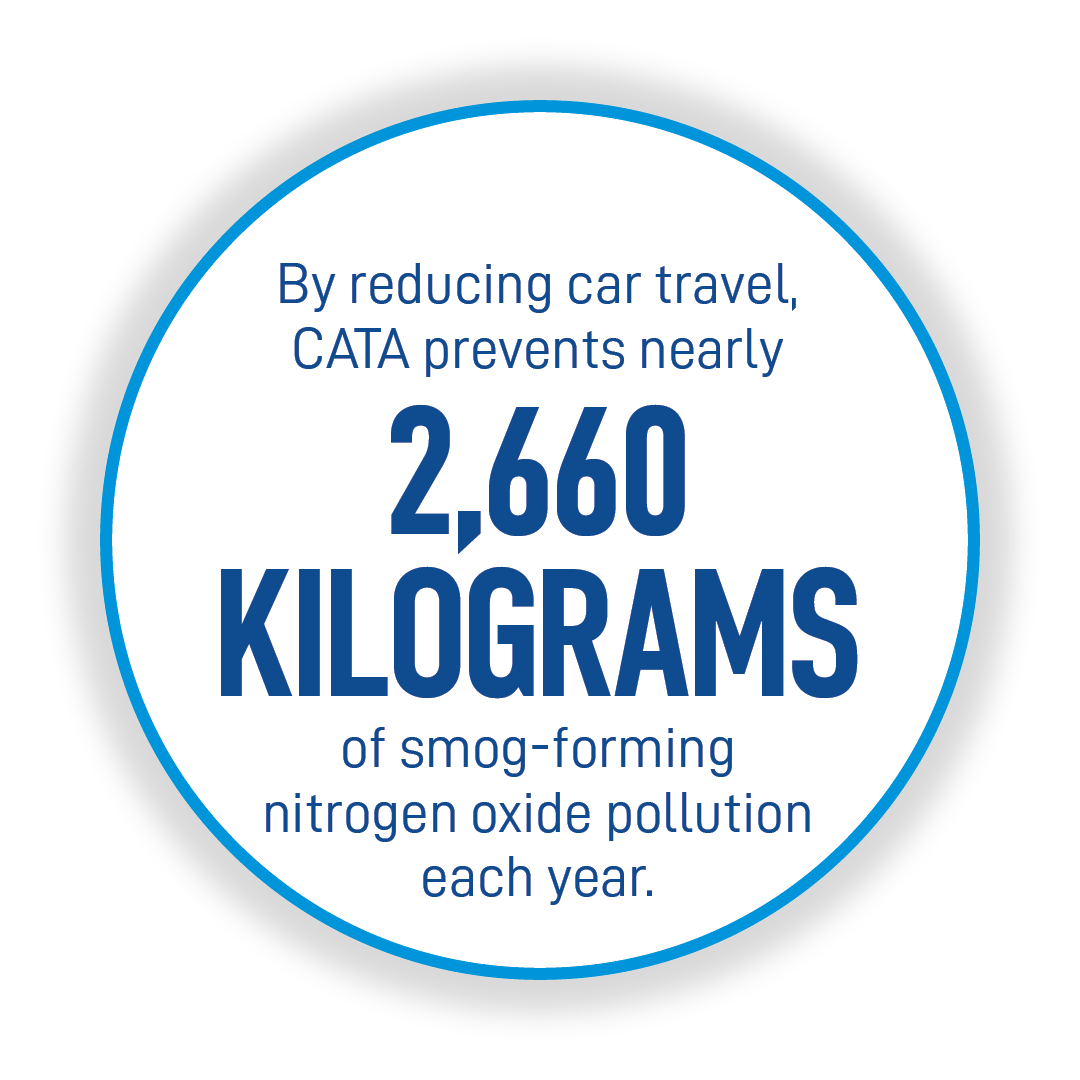
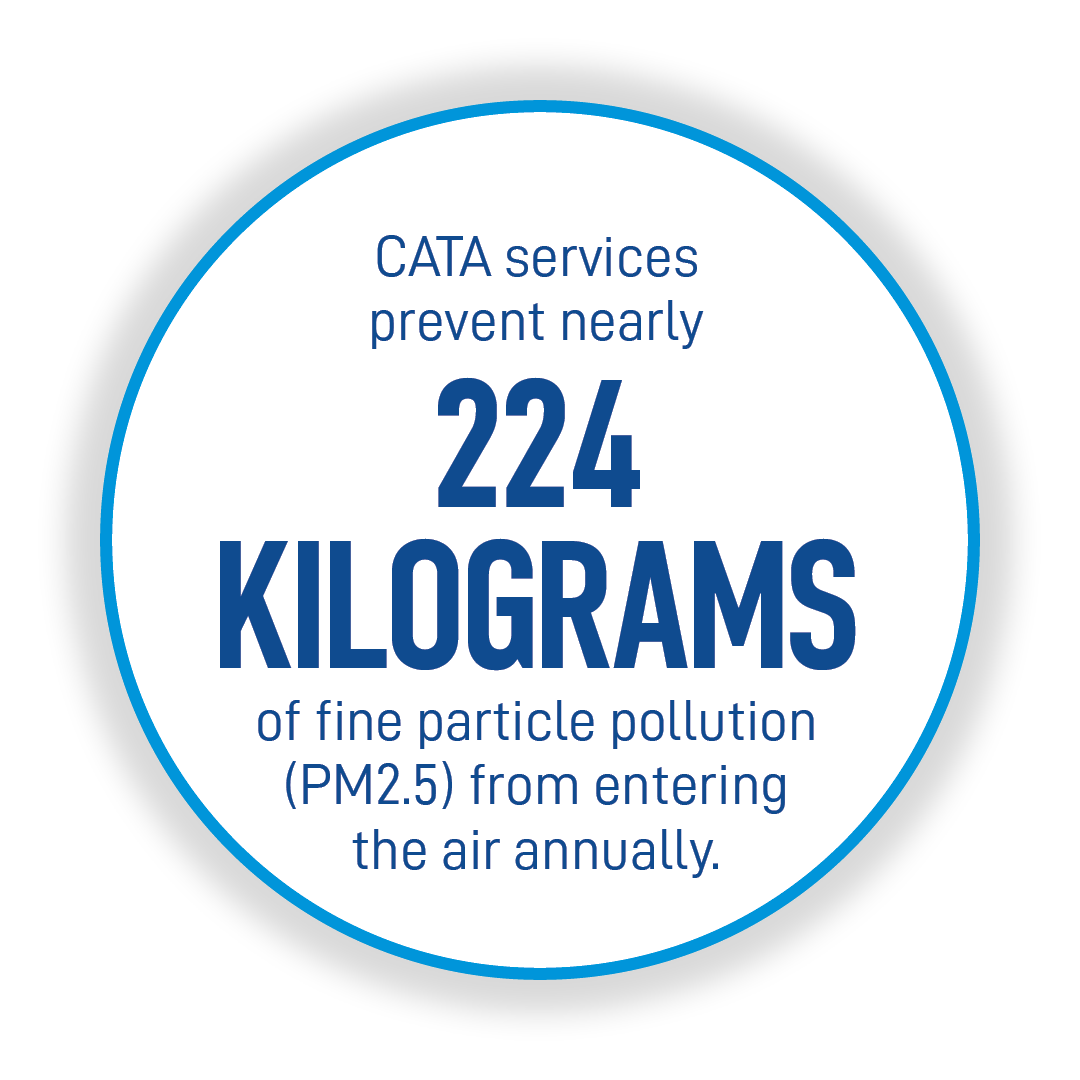
Choosing public transit can make a meaningful difference for the environment and the community. By highlighting the benefits of fixed-route transit compared to single-occupancy vehicles, Capital Area Transportation Authority aims to encourage more sustainable travel choices that help reduce emissions, improve air quality, and support a healthier quality of life throughout the region.
With more passengers riding together, buses produce significantly lower CO₂ emissions per passenger mile than individual cars — making public transit an important part of a more sustainable future.
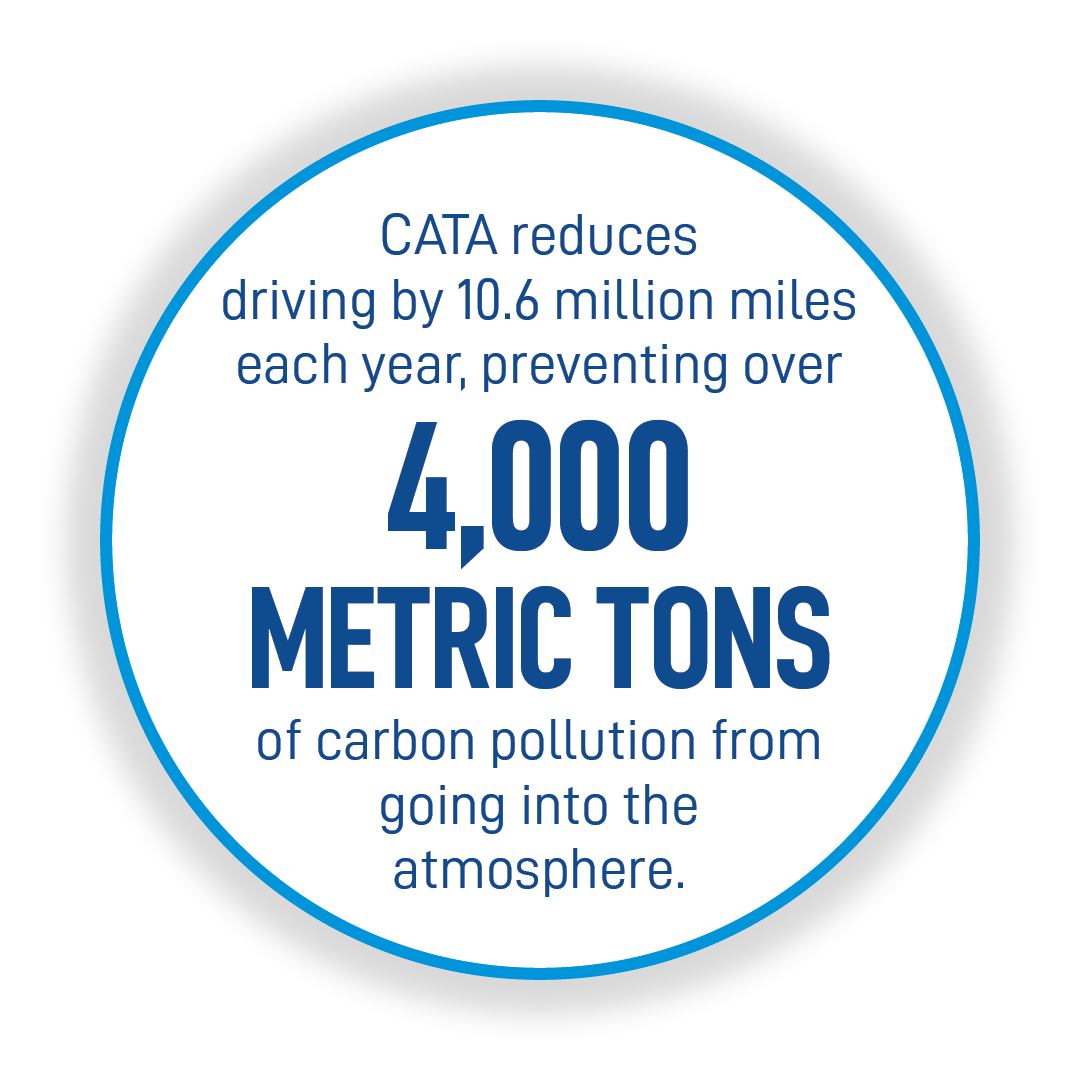
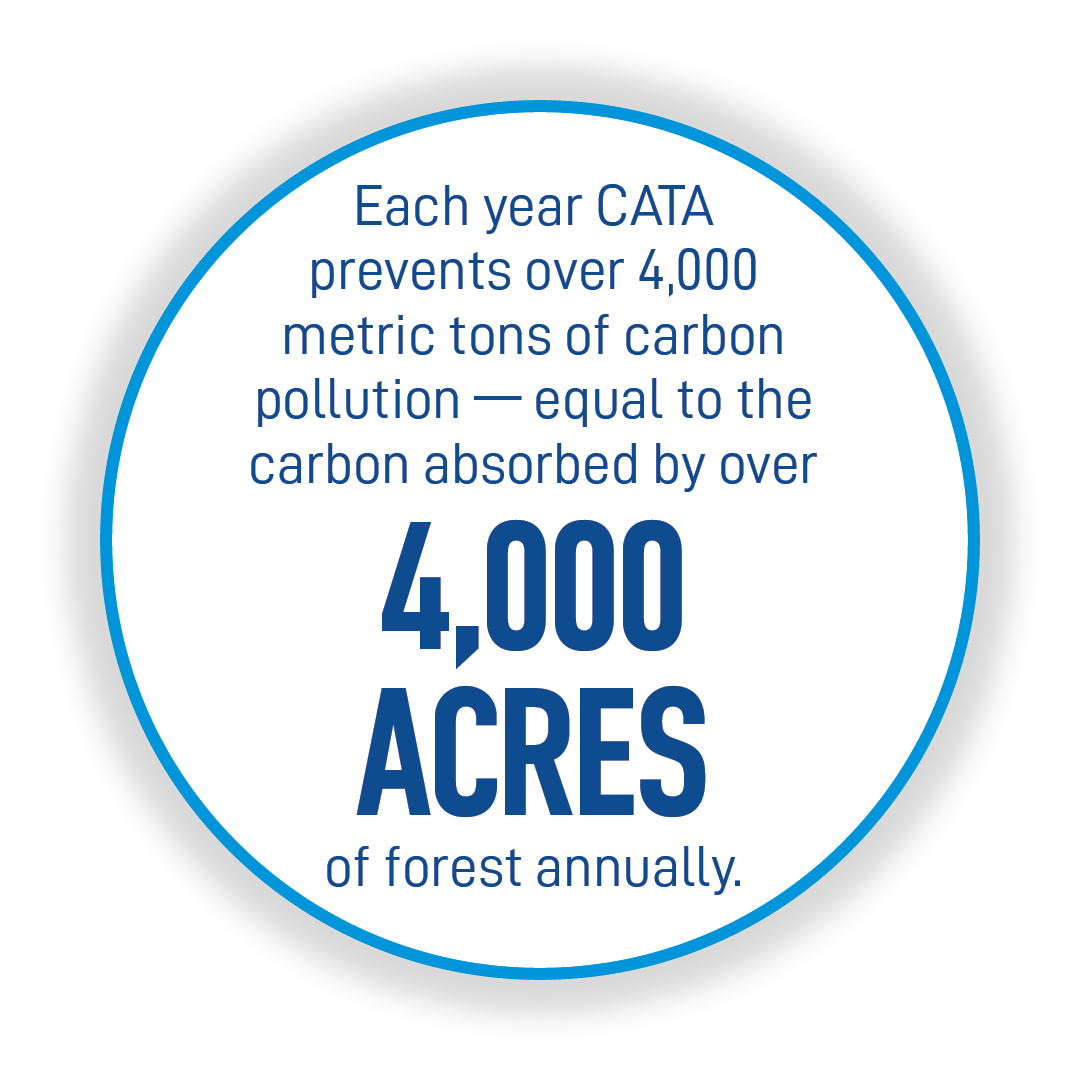
Cleaner air benefits everyone. Reducing vehicle emissions can help create healthier neighborhoods, protect local ecosystems and preserve the natural spaces shared across the Capital City region. From parks and rivers to trees and wildlife habitats, sustainable transportation plays a role in protecting the environment for future generations.
Every trip taken on public transit contributes to a broader effort to reduce congestion, lower pollution and support a cleaner region for all who live, work, and travel here. By choosing to take public transit, riders help move the community toward a future that prioritizes cleaner air, environmental stewardship and a stronger connection to the world around us.
It’s electric: charging into the future
Imagine a future where your bus ride is as clean as the air you breathe — no fumes, no emissions, just smooth, quiet rides. CATA is accelerating its drive toward sustainable public transit and making significant progress toward an all-electric future. While existing hybrid-electric buses are a step in the right direction, electrifying the fleet will further reduce carbon emissions and help achieve CATA’s goal of net-zero carbon emissions by 2035.
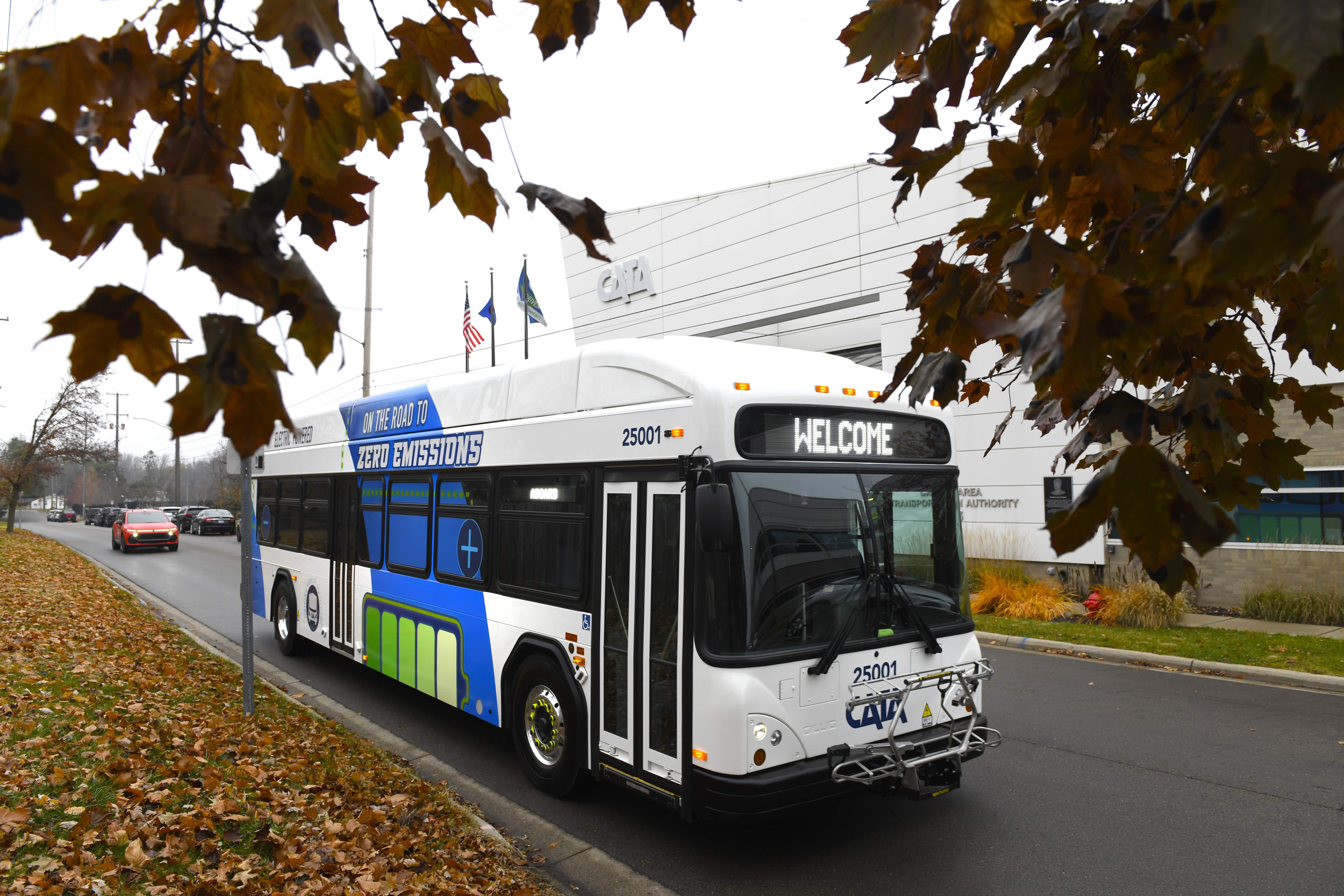
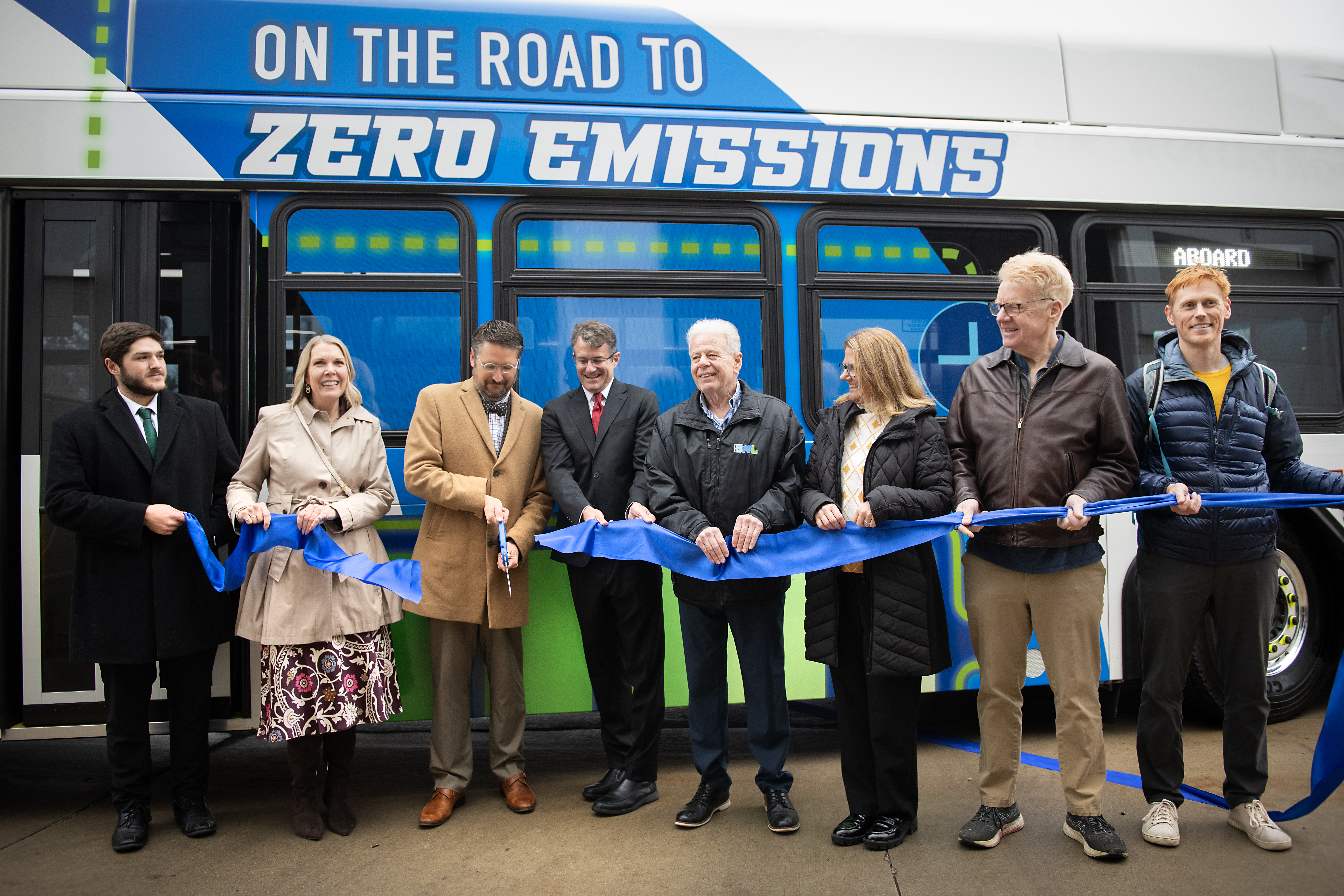
With support from federal grants, CATA has ordered two all-electric, 40-foot buses, which will be the first full-size buses powered entirely by electricity to roll out on area roads.
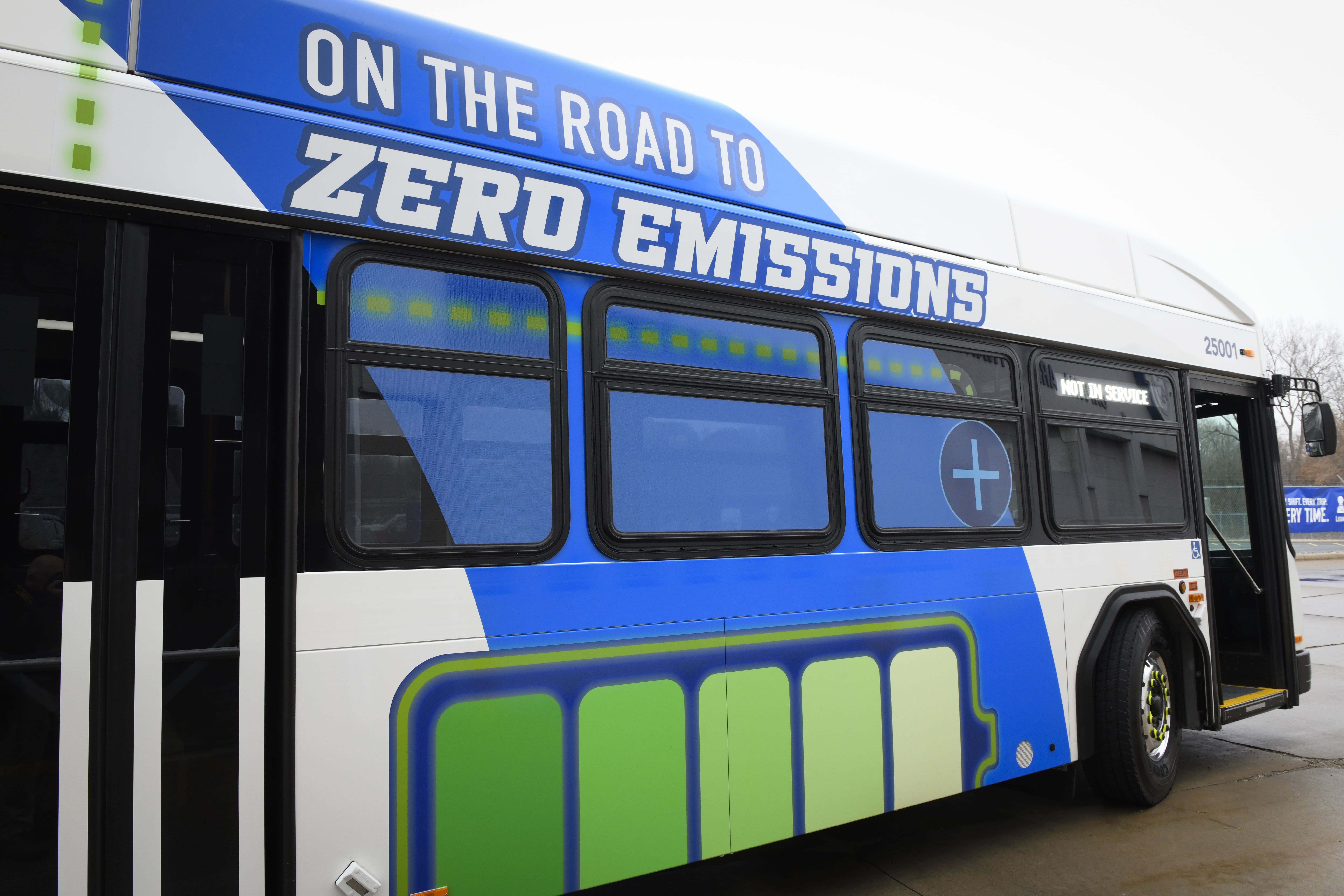
The first bus is entering the fleet this year. The vehicle is the first all-electric powered bus to be added to the fleet, charging forward towards CATA’s commitment to zero emissions by 2035. Gillig’s zero emissions Battery Electric Bus boasts the highest Altoona Score ever achieved by a zero-emission bus. The 100-point FTA scoring system measures performance across structural integrity, safety, fuel economy and more.
“This bus isn’t just a new vehicle, it’s a symbol of our commitment to cleaner air, quieter streets and modern mobility for our community,” said CATA Chief Executive Officer Bradley T. Funkhouser. “By deploying this electric bus, we’re taking a decisive step toward our zero-emission target for 2035, and we’re doing so in partnership with local, state and federal leaders who share our vision.”
The second bus is expected to enter the fleet in 2026.
Both buses are purchased from U.S. manufacturers and will complement the eight other electric vehicles — four Chevy Bolts and four Chevy Equinoxes — already in the fleet.
With the commitment to sustainable transit solutions, CATA is not just driving buses — it’s driving the change needed for a cleaner, greener future.
Fact Sheet
CATA selected Gillig for its track record of designing, building and supporting some of the safest, most reliable, durable and cost-effective buses in the industry. The zero-emission model chosen by CATA delivers leading performance, validated reliability and robust safety features. Built in the United States on a proven low-floor platform, it delivers the durability and operational readiness needed for agencies transitioning to clean transportation.
CATA secured funding for the battery electric bus through a combination of federal and state programs, including the FTA’s Section 5339(c) Low or No Emission Grant Program, along with matching funds from the MDOT Comprehensive Transportation Fund. The federal share totals $1,031,760, with an additional $257,940 in state match, bringing the total bus cost to $1,289,700
- Achieved the highest Altoona test score among all zero-emission buses, confirming unparalleled performance, reliability, and safety.
- Demonstrated 79% less downtime than competing battery-electric buses in testing.
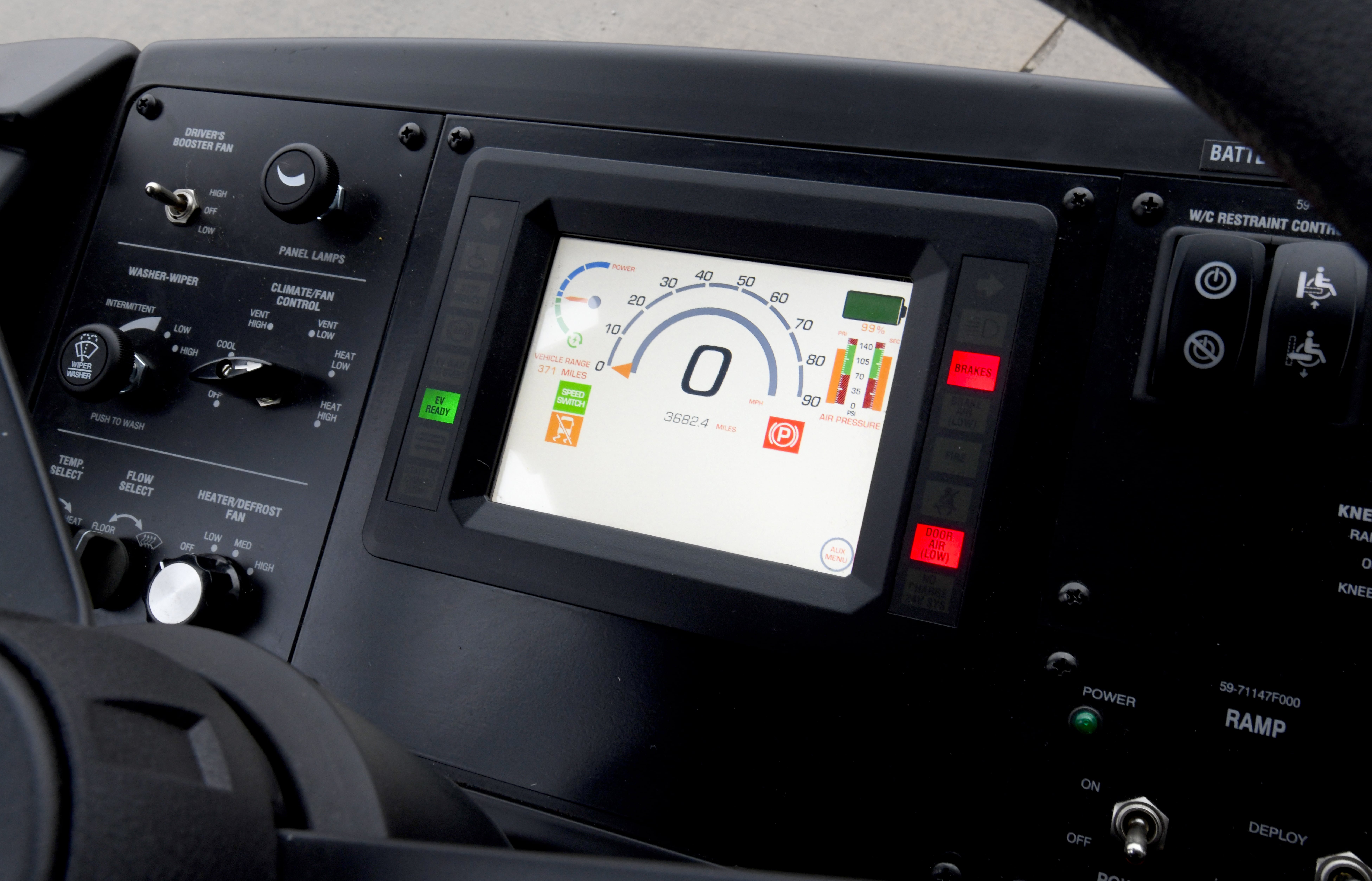
- On-board energy storage options up to 686 kWh, enabling extended service range and reduced charging frequency.
- Direct-drive, permanent-magnet electric motor is high-efficiency and maintenance-free, reducing operational costs and service needs.
- Smart energy management and thermal regulation systems maximize battery life and maintain consistent performance in all climates.
- Equipped with state-of-the-art battery safety mechanisms, ensuring thermal protection and safe operation in demanding service environments.
- Best-in-class braking performance supports passenger safety and operator confidence.
- Built with a corrosion-resistant stainless steel chassis and lightweight aluminum body for long-term durability well beyond FTA minimums.
GILLIG provides flexible charging solutions compatible with agency infrastructure and operational strategies:
- Standard: Curbside rear DC fast-charge port
- Options: Street-side front or rear DC charge ports, overhead pantograph rails, inductive charging systems
- Supports plug-in, DC fast charging, overhead, and inductive charging technologies.
- Engineered for performance in all climates, including extreme cold with optional features.
- Modular design allows agencies to configure seating, styling, and accessibility to suit community needs.
- Built on GILLIG’s familiar Low Floor platform, ensuring operator and mechanic continuity as fleets transition to zero emissions.
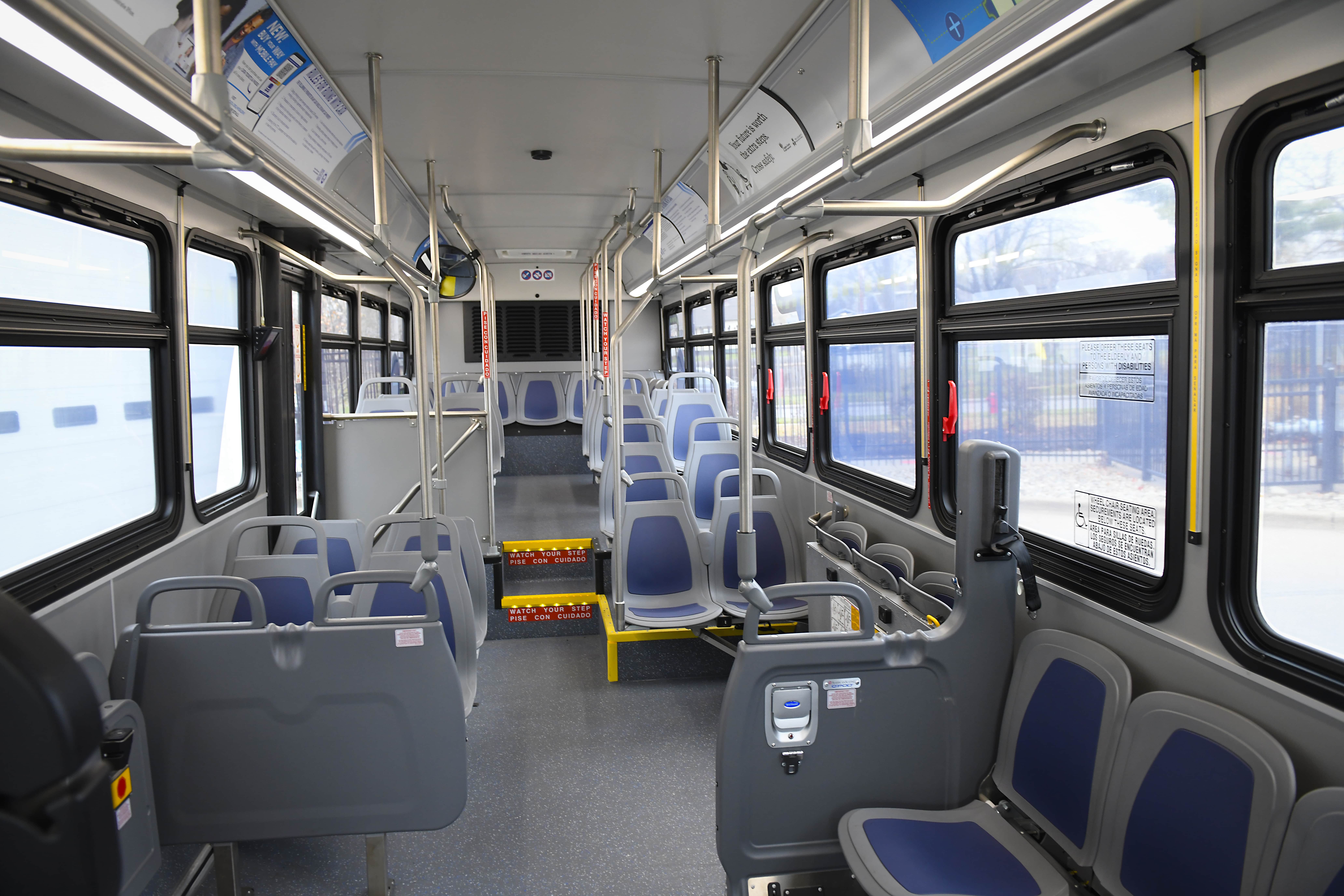
- Wide front aisle and accessible layout designed for smooth boarding and rider mobility.
- Advanced HVAC system and resilient suspension contribute to a comfortable, quiet ride experience.
- Designed for easy serviceability, featuring large access panels and quick-change skirt sections to minimize downtime.
- National network of field service experts, comprehensive technical training programs, and a robust inventory of aftermarket parts ensure long-term support.
- GILLIG’s “Quality Without Compromise” approach provides dependable performance throughout the full operational lifecycle of the vehicle.
Every GILLIG electric bus is engineered and manufactured at the company’s Livermore, California facility—continuing a legacy that has made GILLIG “America’s Trusted Name in Transit” for more than a century.