On the Road to Zero Emissions
CATA is committed to building a cleaner, more sustainable future for public transportation.
Commitment to Sustainability
Through investments in electric and hybrid buses, expanded mobility options like CATA Rydz and ongoing operational improvements, CATA is working toward a goal of achieving net zero carbon emissions by 2030.
As part of this long-term commitment, efforts across the system continue to focus on reducing environmental impact while providing reliable transit service and supporting healthier communities throughout the greater Lansing region.
Cleaner Air for All
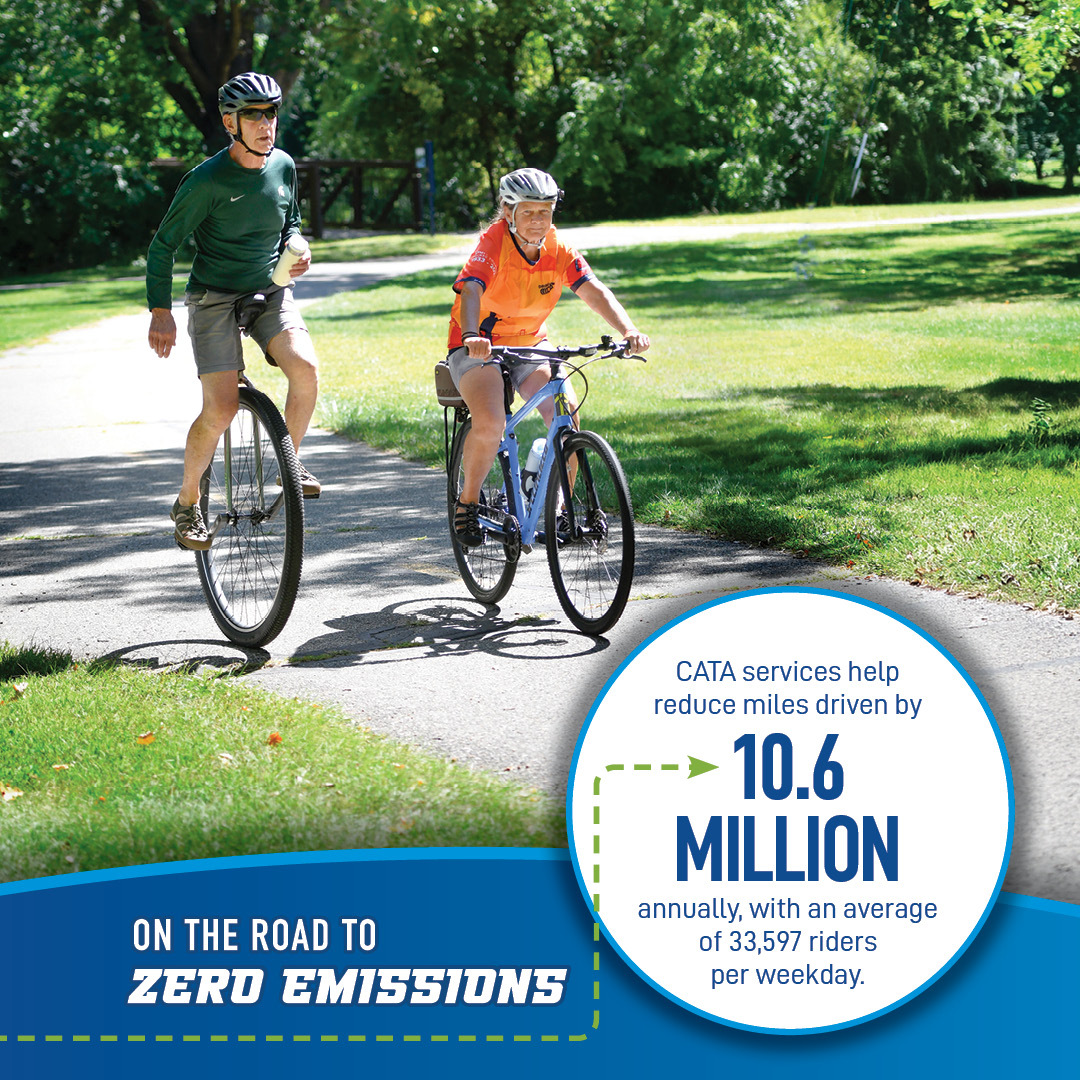
Choosing public transit can make a meaningful difference for the environment and the community. By highlighting the benefits of fixed-route transit compared to single-occupancy vehicles, Capital Area Transportation Authority aims to encourage more sustainable travel choices that help reduce emissions, improve air quality, and support a healthier quality of life throughout the region.
With more passengers riding together, buses produce significantly lower CO₂ emissions per passenger mile than individual cars — making public transit an important part of a more sustainable future.
Cleaner air benefits everyone. Reducing vehicle emissions can help create healthier neighborhoods, protect local ecosystems and preserve the natural spaces shared across the Capital City region. From parks and rivers to trees and wildlife habitats, sustainable transportation plays a role in protecting the environment for future generations.
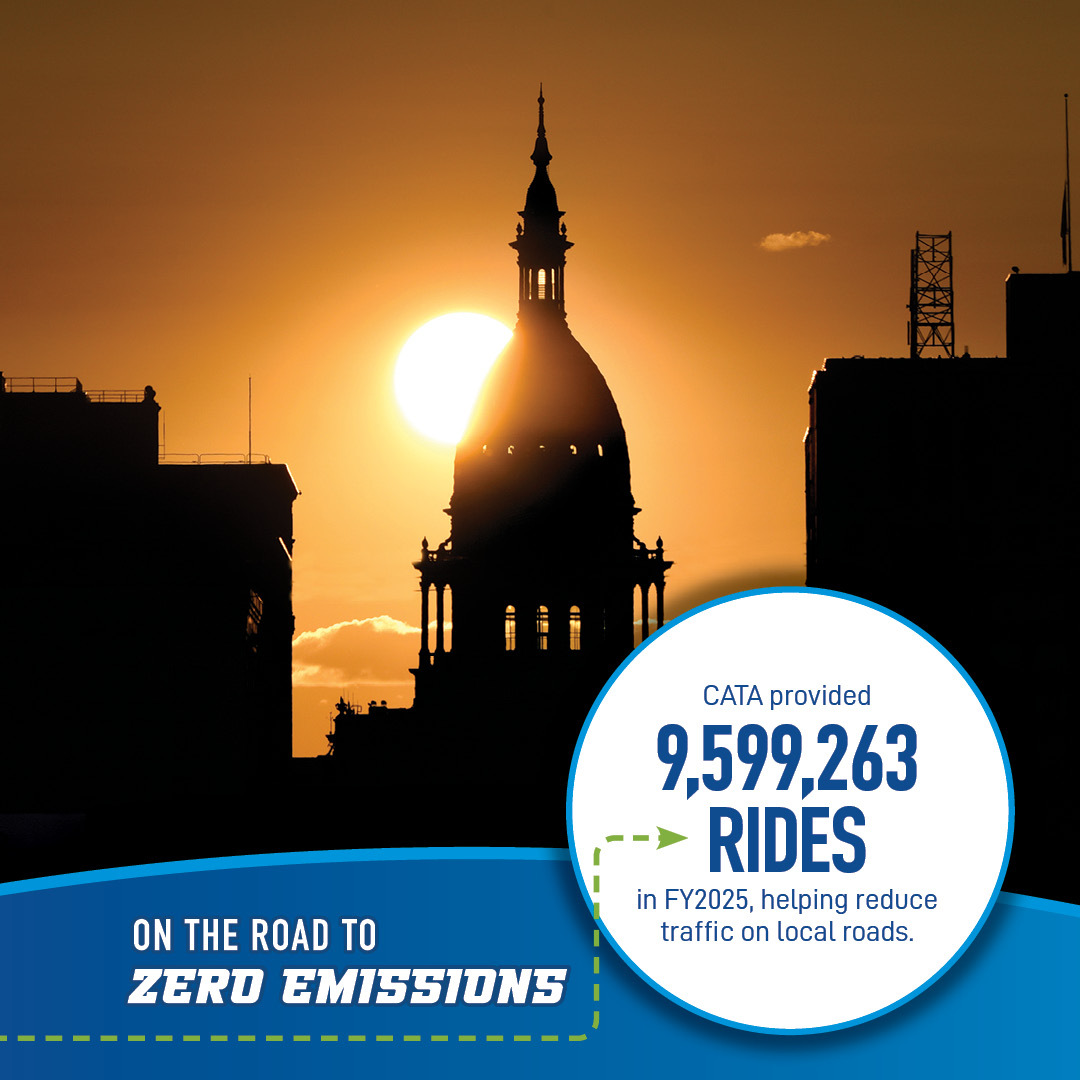
Every trip taken on public transit contributes to a broader effort to reduce congestion, lower pollution and support a cleaner region for all who live, work, and travel here. By choosing to take public transit, riders help move the community toward a future that prioritizes cleaner air, environmental stewardship and a stronger connection to the world around us.


It’s electric: charging into the future
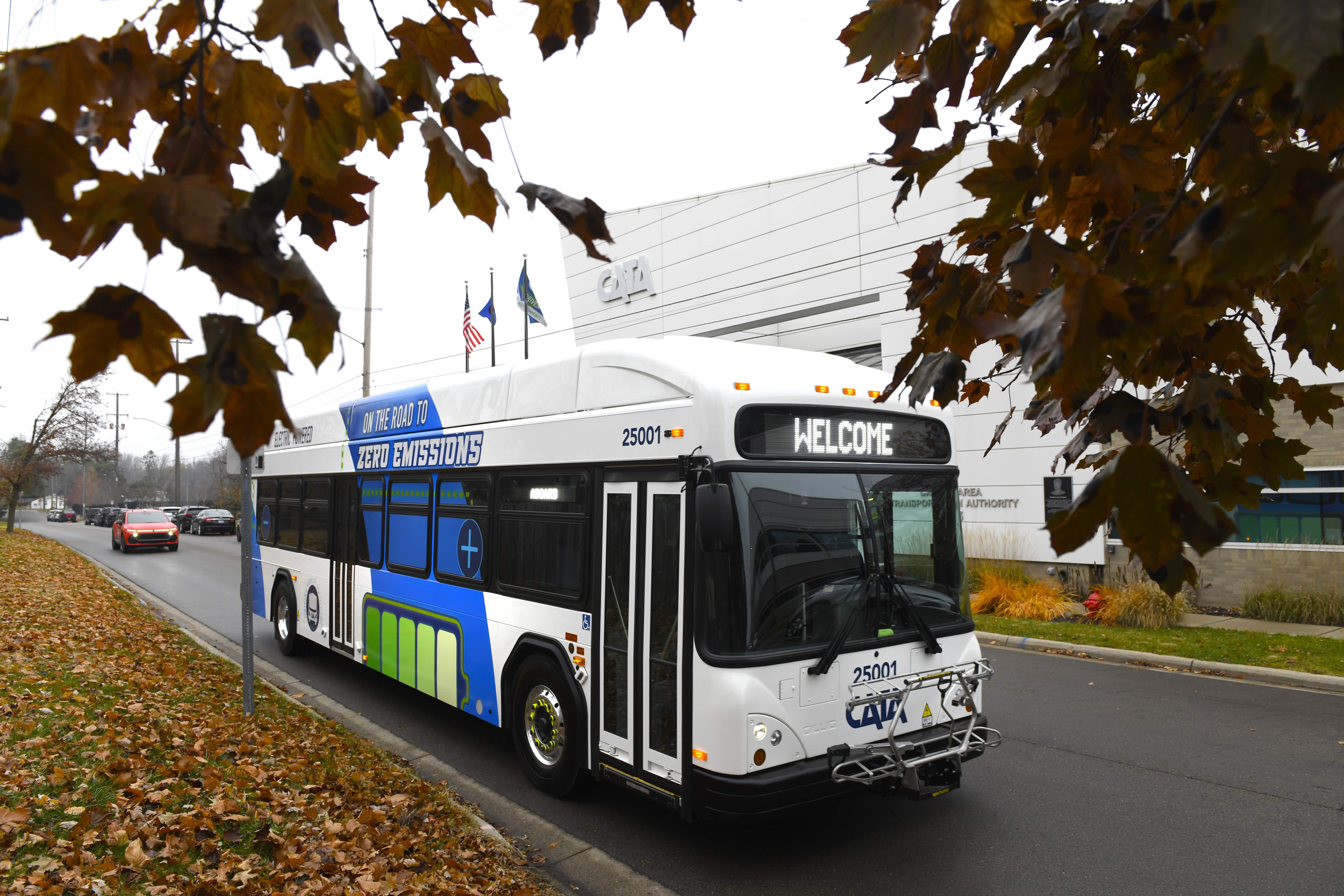
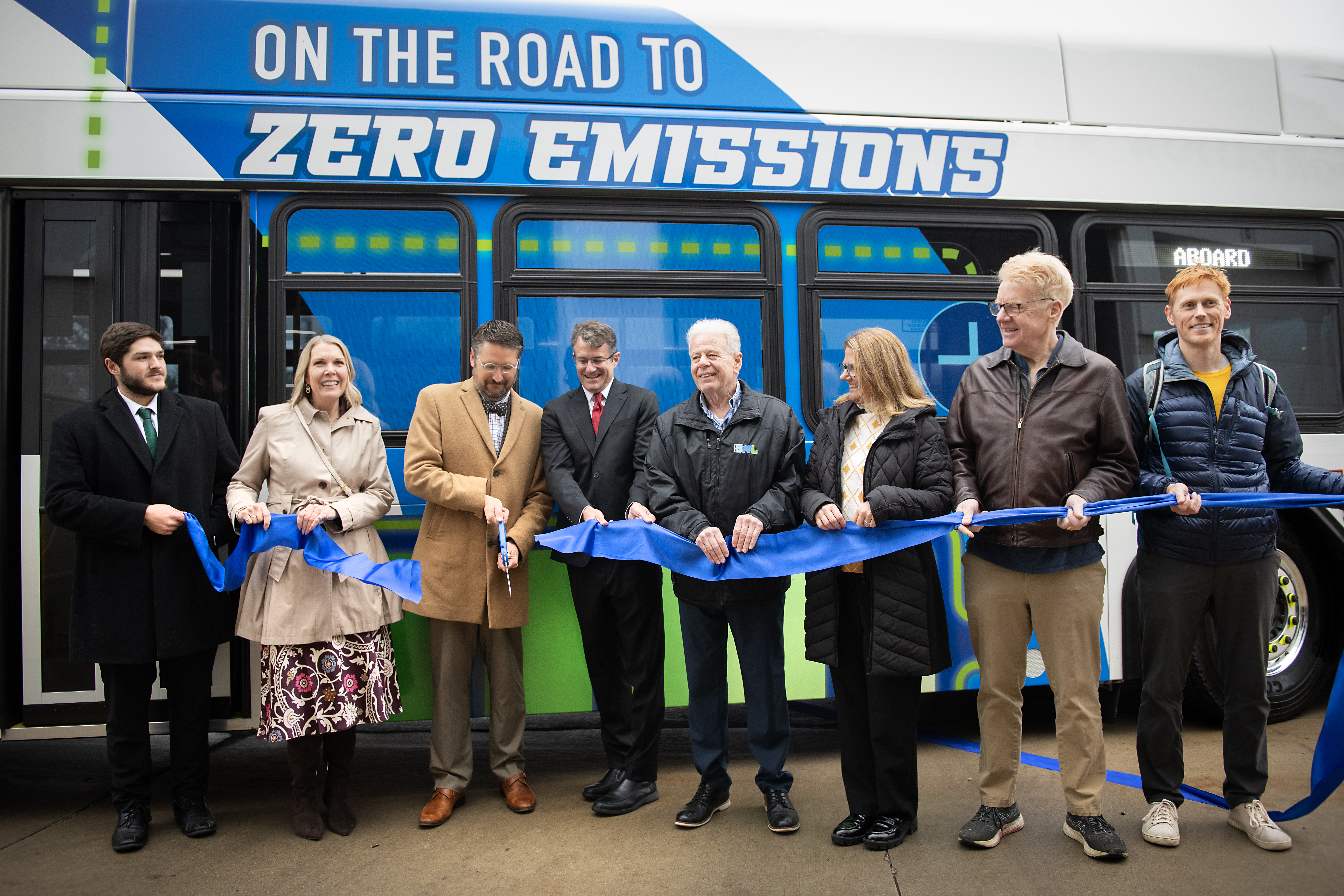
CATA unveiled its first full-size battery-electric bus on Nov. 20, 2025, marking a milestone in its transition toward a zero-emission fleet. Manufactured by GILLIG, the bus was funded through the Federal Transit Administration’s Low- or No-Emission Grant Program, with matching support from the Michigan Department of Transportation (MDOT).
The unveiling event featured remarks from CATA CEO Bradley T. Funkhouser, CATA Board Chair Nathan Triplett, MDOT Office of Passenger Transportation Administrator Jean Ruestman and Lansing Board of Water & Light General Manager Dick Peffley. State Sen. Sarah Anthony also provided a statement supporting the project. Attendees had the opportunity to experience the new technology firsthand during a demonstration ride.
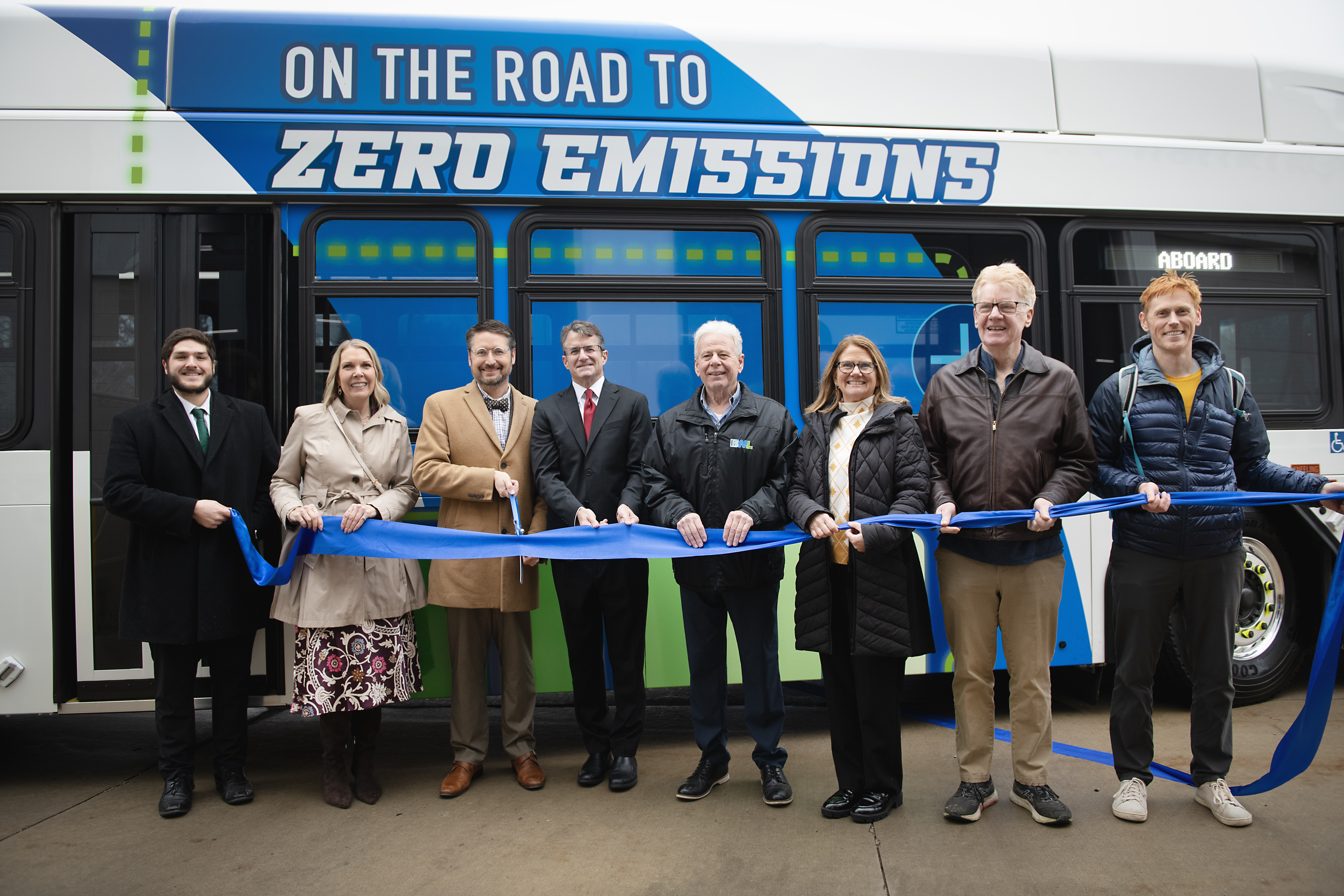
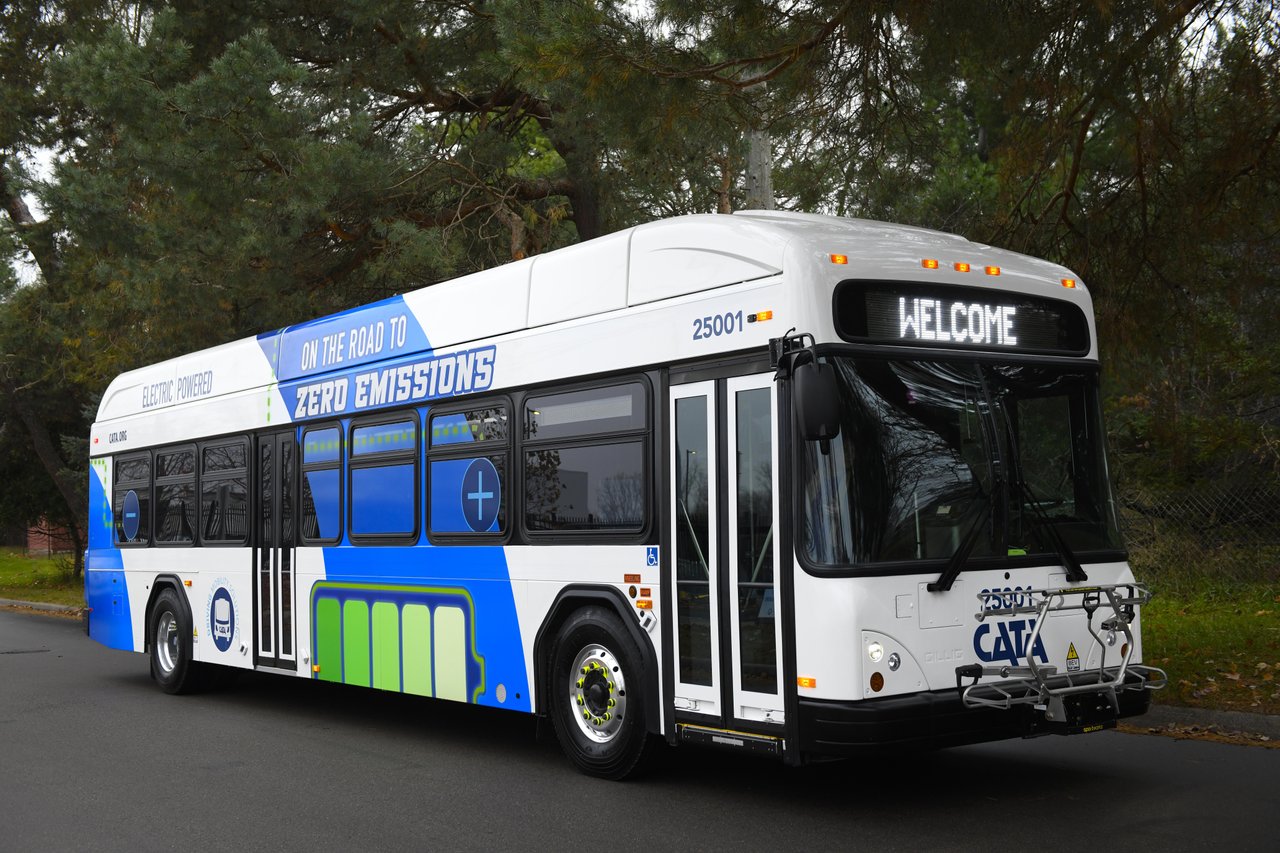
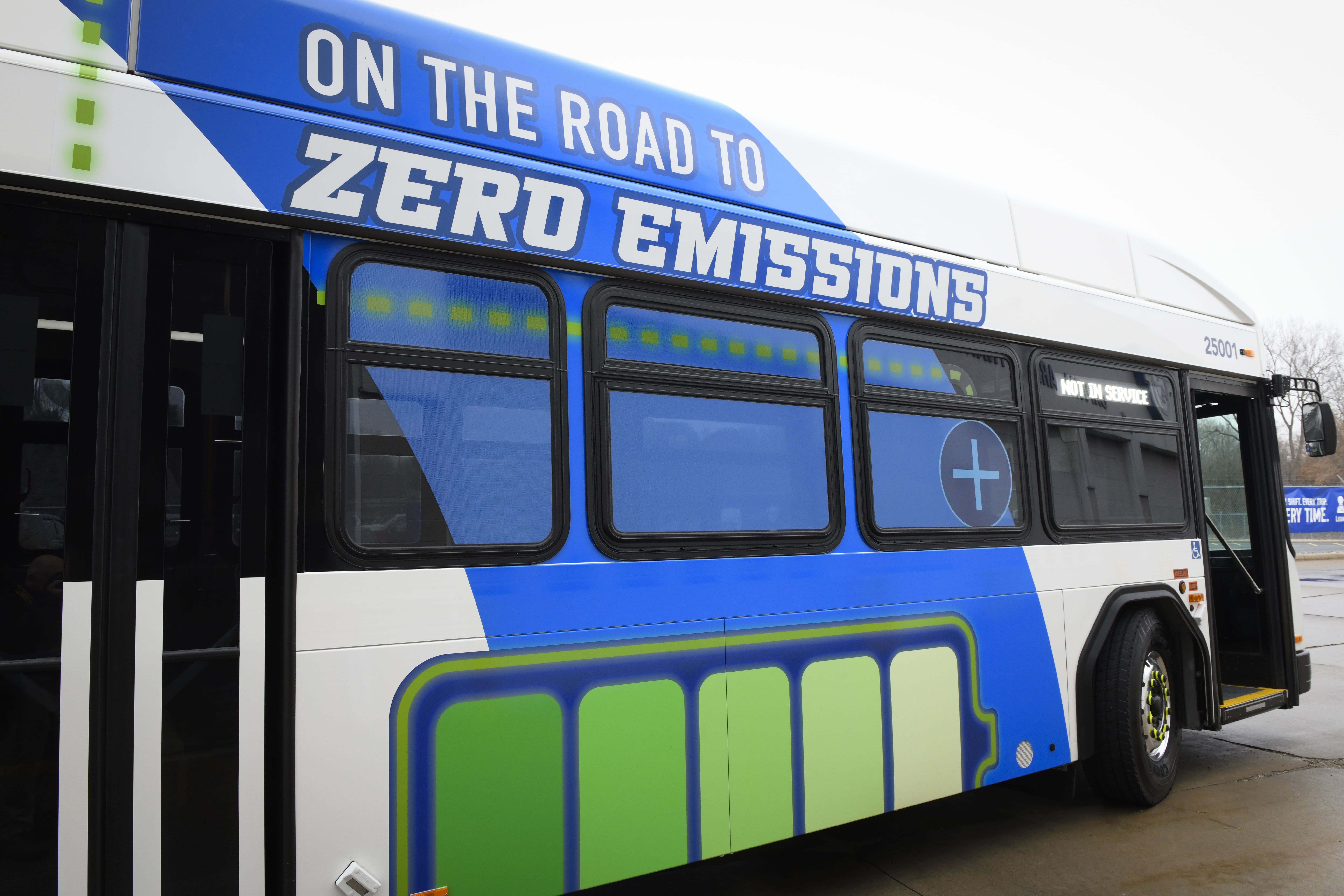
The bus features a bold, electric-themed wrap in blue, green and white, with the message “On the Road to Zero Emissions” and graphics highlighting its electric-powered technology.
CATA’s Green Fleet
CATA is expanding its use of battery-electric and hybrid-electric vehicles as part of its long-term emissions reduction strategy.
Today's Green Fleet
- 2 Full-size battery-electric buses
- 17 Hybrid vehicles
- 11 Electric support vehicles
- 43 Older hybrid-electric fixed-route buses
- 3 Battery-electric full-size vans
Coming Soon
- 13 hybrid-electric Flex buses expected by the end of 2026
- 8 additional hybrid-electric Flex buses expected in early 2027
Investing in Electric Vehicle Infrastructure
Transitioning to cleaner vehicles also requires investments in the equipment, facilities and employee training needed to support them.
CATA purchased specialized tooling for its New Flyer and GILLIG electric vehicles and invested in training to prepare employees to work with the new technology.
In March 2026, CATA completed installation, onboarding, commissioning and activation of four new SWTCH electric vehicle chargers in the employee parking lot at its Tranter facility. These chargers support the infrastructure needed to operate and maintain CATA’s growing electric fleet.