Buildings
CATA operates buildings and structures across greater Lansing that serve our riders and community. From bus shelters to transportation centers, these facilities provide comfort, safety and access to public transit
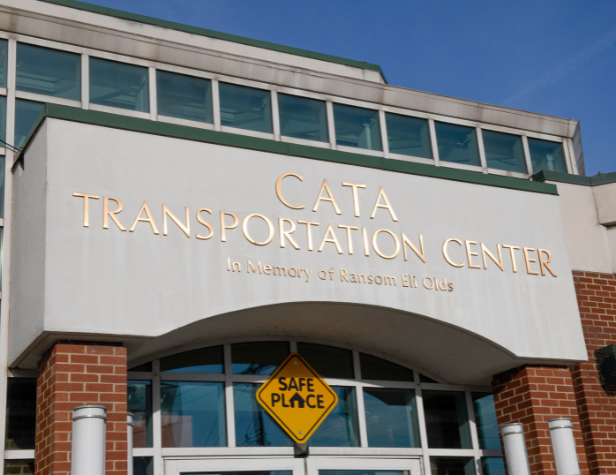
CATA Transportation Center
420 South Grand Avenue, Lansing, MI 48933
The CATA Transportation Center is CATA's main boarding center for the Lansing area. Built in 1997, the CTC is located in downtown Lansing on Grand Avenue between Lenawee and Kalamazoo Streets.
The CTC is home to our customer service center and serves as the transfer point for 16 CATA routes. Greyhound and Indian Trails also operate a ticket booth and boarding point from this facility.
Hours
- Monday – Friday: 7 a.m. – 7 p.m.
- Saturday – Sunday: 9 a.m. – 5 p.m.
Amenities
- Customer Information Booth
- Pass and bus token sales
- CATAClub applications
- Lost and found
- Trip planning help
- Indoor seating area
- Bike lockers
- Public restrooms
- ATM and vending machines
- Security Office
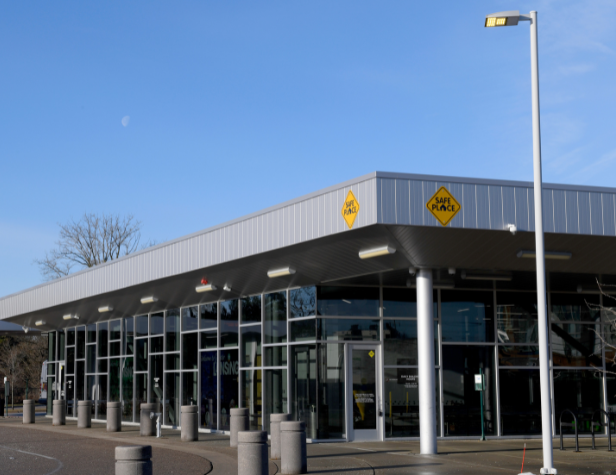
Capital Area Multimodal Gateway, Operated by CATA
1240 S. Harrison Road, East Lansing
Opened in November 2015, the Gateway is a transportation facility adjacent to MSU’s campus. The Gateway replaced the original Amtrak station with a modern building that welcomes visitors and showcases the region.
The transit facility is served by Amtrak, CATA Indian Trails and CATA Rydz, providing a central location for regional mobility access.
Hours
Building: Daily, 7 a.m. – 10 p.m.
CATA and Indian Trails ticket booth: Daily, 9 a.m. – 6 p.m.
Services Available
- Daily Amtrak Blue Water service to Chicago and Port Huron
- Intercity bus service on Indian Trails
- Taxi service
- CATA Routes 18 and 20 year-round, Route 35 during MSU fall and spring semesters
Amenities
- Four canopied and well-lit bus-boarding bays
- Designated drop-off and pickup areas
- Ticket and information booth
- Three climate-controlled waiting areas
- Pay-by-plate parking lot for approximately 150 vehicles
- Two electric vehicle fast-charging stations
- Public restrooms
- Vending services
- Schedules, brochures and maps
- Kinetic sculpture 'Calliope's Movement' by Jeffery Laudenslager
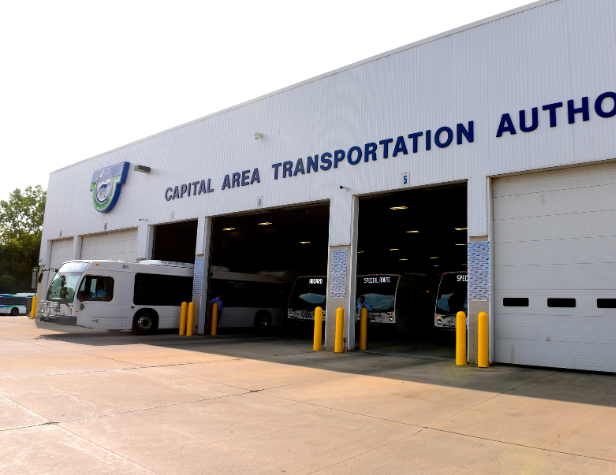
CATA Administration Offices
4615 Tranter Street, Lansing, MI 48910
Located in south Lansing on Tranter Street between Jolly and Cavanaugh east of Pennsylvania, CATA's administrative facility moved to its current location in 1976. The building has undergone several renovations and expansions to accommodate CATA's growing transit operation.
This facility is home to CATA's executive offices and bus storage facility, which houses CATA's entire fleet. Administrative departments include operations, customer experience, maintenance, planning, marketing, human resources, finance and more.
Hours
- Monday – Friday: 8 a.m. – 5 p.m.
Services Available
- Pass and bus token sales
- CATAClub applications
- Schedules, brochures and maps
- CATA student ID cards
- Served by Route 6 Cedar-Jolly Connection
Phone: 517-394-1100
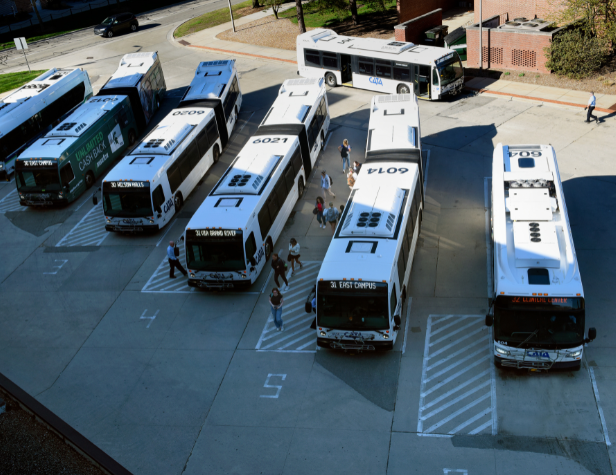
MSU-CATA Transportation Center
Shaw Parking Ramp No. 1, MSU Campus, East Lansing
Built in 2002, the MSU-CTC is located on the ground level of Parking Ramp No. 1. The ramp sits between North and South Shaw Lanes, just east of the MSU Planetarium.
The MSU-CTC provides centralized access to all campus bus routes and services. Riders can catch all MSU routes and Route 26 for service to Bath Township student apartment complexes.
Hours
- Open 24 hours a day, 7 days a week
Amenities
- Indoor seating area
- Schedules, brochures and maps
- Free phone access to Customer Experience Representatives
- Community policing office
- Restrooms
- ATM and vending machines
Bus Shelters and Fleet
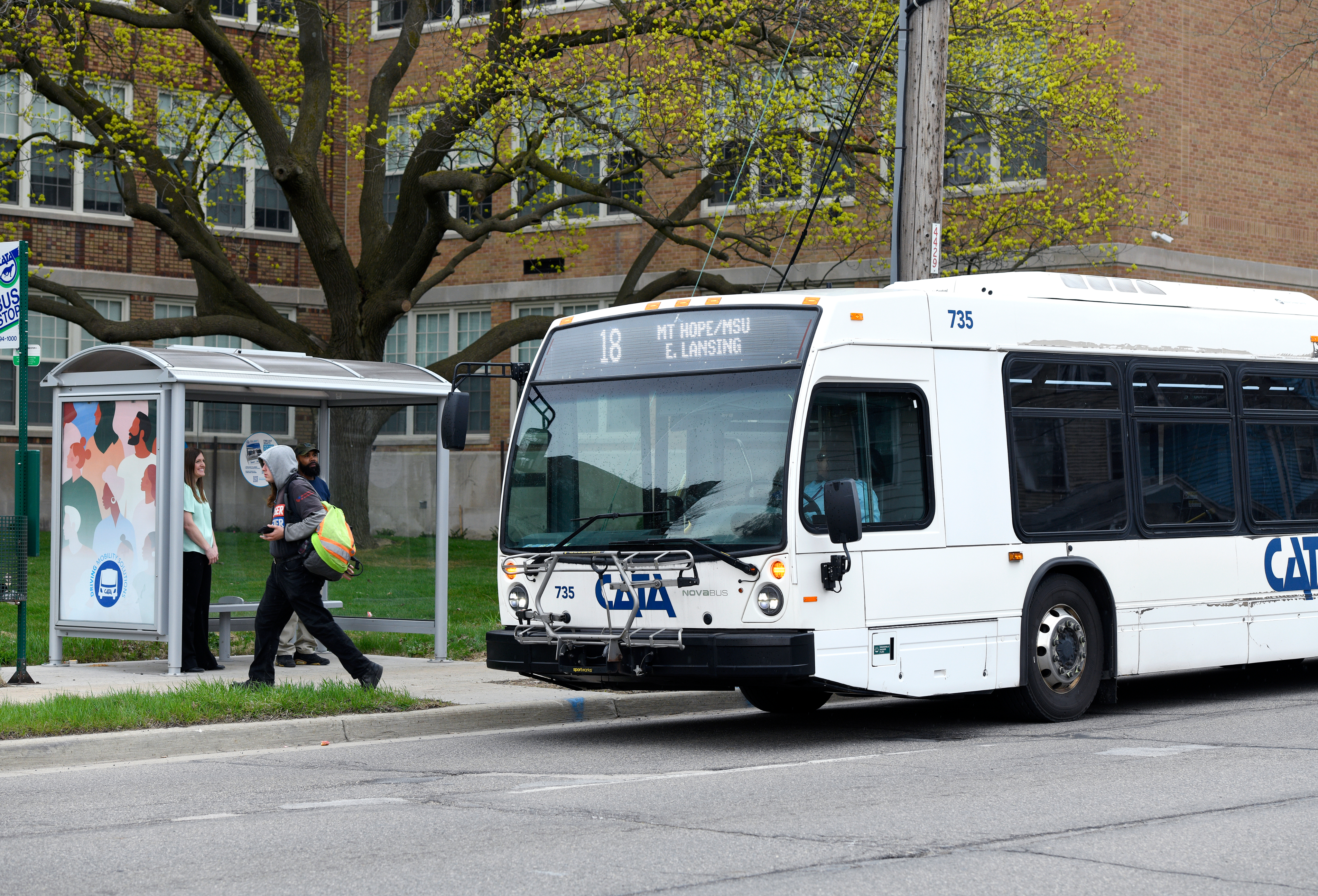
Beyond our buildings, CATA's infrastructure serves you on the street every day. Our bus shelters provide comfort while you wait, and our fleet gets you where you need to go. Here's what makes them special.
Bus Shelter Pilot Project
CATA installed six special bus shelters at high-traffic stops in 2019. These shelters combine culture and community to inspire neighborhood pride and celebrate diversity. Each shelter features unique artwork and amenities designed with community input.
Eastbound Holmes past Pleasant Grove
Stop 1797
This shelter showcases local joy and diversity with a pseudo-stained glass mural. The shelter was designed with the Southside Community Coalition.
Amenities: Electricity, LED lighting
Northbound Pennsylvania before Lindbergh
Stop 3539
This stop was moved to improve accessibility and safety. The Sycamore Park Neighborhood Association asked the public to vote on the shelter design and artwork. Local artist Nate Gonzalez created the artwork.
Amenities: Solar lighting
Southbound Hagadorn before Wilson
Stop 6071
This Spartan bus shelter celebrates Michigan State University pride in East Lansing. Located on one of the busiest avenues on campus, thousands of people see this shelter each day.
Amenities: Real-time bus tracking, lighting, USB ports, Wi-Fi
Eastbound Michigan Avenue past Grand Avenue
Stop 1672
This shelter sits just blocks from the Capitol steps and reflects the grandeur of the Capitol building. The shelter is in an obstruction-free zone, which allows it to optimize solar panels.
Amenities: 100 percent solar lighting, real-time bus tracking
Westbound Grand River past M.A.C
This shelter is located in the heart of East Lansing's prime shopping, dining and living hub. The design shows the diversity and inclusion of the city.
Amenities: Real-time bus tracking, lighting, USB ports, Wi-Fi
Southbound Cedar Street at Edison
Stop 6033
This shelter serves one of CATA's busiest routes. Route 5 riders will find this shelter directly in front of the Forest Community Health Center and near City Rescue Mission of Lansing.
Amenities: Real-time bus tracking, lighting, USB ports, Wi-Fi
Our Fleet
CATA operates a diverse fleet of vehicles to serve greater Lansing. Our buses range from standard 40-foot transit buses to small passenger vans
Fleet Overview
- 96 standard 40-foot buses (includes 39 hybrids)
- 12 articulated 60-foot buses (includes 5 hybrids)
- 2 medium-duty hybrids
- 50 small buses (25-foot)
- 55 passenger vans
- 1 shopping bus
Total vehicles: 218
Total hybrid vehicles: 46 (41% of large buses)
Fixed-Route Bus Features
- Low-floor entry or lifts
- Bike racks
- Audio stop announcement system
- Electronic fareboxes
Hybrid Bus Benefits
CATA is the first transit system in Michigan to operate 40-foot diesel electric hybrid buses. These buses offer:
- Greater fuel economy
- Cleaner emissions
- Reduced maintenance costs from extended brake life and engine oil life
- Smoother ride for passengers
- Quieter operation with sound levels approaching a passenger car
All small buses and trolley buses are lift-equipped for accessibility.